
What is the difference between a food freeze dryer and a food dehydrator?

1. Different Working Principles: Hot-Air Evaporation vs. Vacuum Sublimation
How Traditional Food Dehydrators Work
Traditional dehydrators rely on heated air circulating continuously around the product. As temperatures rise, surface moisture evaporates and is swept away by the airflow.
While this setup is straightforward, highly cost-effective, and practical for basic preservation, this air-drying approach has clear engineering limitations.
During hot-air drying, moisture escapes from the surface first. This causes the outer layer to dry much faster than the wet core, trapping moisture inside and forming a dense, hard exterior—a defect known as case hardening.
For ingredients with high moisture, sugar, or protein levels (such as fresh fruits, seafood, raw meats, or pet treats), this uneven drying causes several severe issues:
-
Structural warping and heavy product shrinkage
-
Degraded nutritional value due to prolonged heat exposure
-
Poor rehydration capabilities once dried
For manufacturers targeting premium or long-shelf-life markets, traditional hot air fails to deliver commercial-grade quality.
How Vacuum Freeze Dryers Work
Vacuum freeze dryers leverage sublimation, a process where water shifts directly from solid ice to water vapor, completely bypassing the liquid phase. This cycle requires strict low temperatures and deep vacuum levels based on the physical parameters of water’s triple point.
First, fresh food undergoes rapid blast freezing at ultra-low temperatures. The moisture inside the cells locks into microscopic ice crystals while keeping the cellular matrix perfectly intact. This step protects the original shape, texture, and nutritional profile.
Once pre-freezing finishes, the vacuum pump rapidly pulls the drying chamber pressure down from standard atmospheric pressure (~101,325 Pa) to below 10 Pa.
Under this extreme vacuum, physics shift: the frozen ice crystals do not melt into water; they sublimate straight into vapor. The system’s cold trap instantly captures this vapor, condensing it back into ice to protect the vacuum environment.
Because the product stays frozen throughout drying, it avoids the structural collapse typical of hot-air systems. This engineering keeps the original shape, color, flavor, and nutrients intact, delivering excellent rehydration and an exceptional shelf life.

2. Why Do Freeze-Dried Products Command Higher Market Value?
For commercial food processors, drying is never just about removing water. The choice of drying technology directly dictates the final product's presentation, mouthfeel, nutrient retention, shelf life, and shipping weight—all of which establish your ultimate retail price point.
For brands aiming to build high-margin products, understanding these quality differences is far more critical than simply comparing equipment price tags.
Why Dehydrated Products Shrink and Harden
Food dehydrators typically operate with circulating hot air between 50°C and 100°C. While these machines feature simple designs and low upfront costs—making them common in basic processing—hot-air drying faces natural limits.
As moisture evaporates under heat, internal cells lose their physical support. Without internal pressure, the tissues collapse inward and shrink, leading to a shriveled, dense structure.
Fruits lose their plump appearance, vegetables turn leathery, and meats become tough and highly fibrous. Once dried this way, the food struggles to reabsorb water and rarely returns to its fresh state.
The Loss of Heat-Sensitive Nutrients
Beyond altered looks and textures, prolonged exposure to heat degrades essential heat-sensitive nutrients. Components like Vitamin C, natural enzymes, antioxidants, and volatile aromatics break down heavily under hot air.
For low-value commodity goods, these changes might pass unnoticed. However, for premium brands focused on quality and high margins, this degradation directly undercuts product competitiveness and shrinks profit margins.
How Freeze-Drying Preserves Structure, Texture, and Quality
Freeze dryers approach moisture removal from an entirely different engineering angle. Before drying starts, ultra-low temperature flash freezing locks moisture into a stable, uniform ice crystal matrix, preserving the full cellular structure.
In the deep vacuum phase, these ice crystals sublimate directly without ever melting. Because no liquid water moves through the tissues, the cellular walls remain completely undamaged.
As the ice crystals vanish, they leave behind an intricate network of uniform micro-pores. This porous matrix is the secret behind the uniquely light, crispy, melt-in-your-mouth texture found in freeze-dried fruits and snacks.
Rapid Rehydration and Lower Shipping Costs
The resulting product is highly lightweight, completely crisp, and shows virtually zero structural collapse. Ingredients retain their fresh-like state for long-term storage, while the dramatic weight reduction heavily slashes shipping and warehousing overhead.
Thanks to the internal micro-pores, the food acts like a sponge when water is added, quickly rehydrating back to its original fresh texture.
Maximum Nutrient Retention: The Ultimate Premium Advantage
The core advantage of freeze-drying is its unmatched ability to protect native flavor, color, and nutritional value. Operating entirely in a cold, oxygen-free vacuum keeps thermal and oxidative damage to an absolute minimum. Proteins, vitamins, natural pigments, and flavor compounds remain safely locked within the food matrix.
With an optimized processing curve, freeze-drying achieves a nutrient retention rate of over 97%.
This elite quality serves as a powerful market barrier. In fact, retail trends show an accelerating shift where traditional dried fruits in supermarkets are steadily being replaced by premium freeze-dried alternatives.

3. Food Freeze Dryer vs. Food Dehydrator: Core Differences at a Glance
To help you evaluate both systems clearly, we have compiled their key operational and structural differences into the reference matrix below.
Core Comparison Matrix: Food Freeze Dryer vs. Food Dehydrator
| Comparison Dimension | Food Dehydrator | Food Freeze Dryer |
| Dehydration Principle | Continuous evaporation via hot air circulation | Ultra-low temperature pre-freezing; direct ice crystal sublimation under vacuum |
| Operating Mode | High-temperature evaporative dehydration | Vacuum low-temperature sublimation dehydration |
| Typical Operating Temp | 50°C to 100°C | Pre-freezing below -30°C; low temperatures maintained throughout drying |
| Operating Pressure | Atmospheric pressure | Vacuum environment, typically dropped below 10 Pa |
| Product Appearance | Prone to shrinkage, collapse, and deformation | Retains original shape, color, and size |
| Internal Structure | Dense, tough, and hard texture | Porous, lightweight, crispy; excellent rehydration |
| Nutrient Retention Rate | High heat easily destroys vitamins and natural active substances | Typically retains over 97% of nutritional content |
| Rehydration Effect | Slow rehydration; difficult to restore to original state | Rapidly restores original structure upon adding water |
| Shelf Life | Generally shorter; high packaging requirements | Long-term stable preservation when paired with standard vacuum packaging |
| Product Added Value | Best suited for mass-market consumer products | Best suited for high-end and high-value-added products |
| Typical Applications | Dried fruits, spices, herbs, dehydrated vegetables | Freeze-dried fruits, freeze-dried coffee, pet food, freeze-dried candy, biological products, etc. |
Note: Nutrient retention rates may vary depending on product type, formulation, and specific processing parameters.
4. How to Choose the Right Dehydration Equipment for Your Business
There is no absolute "better" machine here; the decision depends entirely on your product goals and target market. The right fit is always the best choice.
If your business model focuses heavily on cost control and your catalog consists of standard dried fruits, spices, or vegetables, hot-air dehydrators remain a mature, economical option.
However, if you are positioning your brand in high-margin markets—such as premium foods, specialty coffee, high-end pet treats, functional foods, freeze-dried candies, or biological products—the quality edge, brand premium, and long-term commercial value of freeze-drying far outweigh the initial machine costs.
Critical Metrics When Evaluating Freeze-Drying Equipment
When sourcing a freeze dryer, price should never be the sole metric. To ensure project success, you must evaluate critical technical performance indicators:
-
Vacuum Performance: Look for systems capable of maintaining deep operational levels (Geliss ultimate vacuum < 0.1 Pa).
-
Shelf Temperature Precision: Tight tolerances are essential for delicate recipes (Geliss≤ ±1°C).
-
Cold Trap Capacity: Ensure the ice-catching capability matches your batch moisture volume.
-
System Stability: The machine must prove reliable under long-term continuous loads.
5. Geliss: Tailored Solutions for Every Stage of Growth
Strategic Procurement Advice
If you are validating a new product recipe or running small test batches, starting with a household or small commercial freeze dryer lets you complete product R&D with minimal upfront risk and lower costs.
As order volumes grow and you need to secure batch-to-batch consistency while maximizing throughput—or if you already have freeze-drying experience and want to scale up—upgrading to a pilot-scale or industrial freeze dryer becomes the necessary choice.
While base build quality matters, a supplier's manufacturing maturity and comprehensive technical support are what dictate whether an asset runs reliably for years and returns value far beyond its purchase price.
Geliss brings over 15 years of dedicated freeze-drying manufacturing experience. Every machine we build undergoes rigorous factory testing and trial runs before shipment to ensure stable, long-term performance in your facility.
From initial recipe development to full commercial production, Geliss provides a seamless equipment upgrade path. This helps you maintain process continuity as your business expands, preventing redundant capital expenditure and unnecessary equipment replacement costs.
Systems Integration and Operational Reliability
From an engineering standpoint, a qualified commercial freeze dryer cannot be summarized as just a "machine that pulls a vacuum."
True batch quality depends entirely on the precise, synchronized performance of the refrigeration system, vacuum system, heating system, and automated control system.
A failure or fluctuation in any single subsystem can ruin an entire multi-hour drying cycle, causing severe losses in time, energy, and valuable raw materials. Whether for commercial output or smaller operations, equipment stability is always far more critical than an artificially low purchase price.
6. Source Manufacturing: The Only Real Guarantee of Equipment Quality
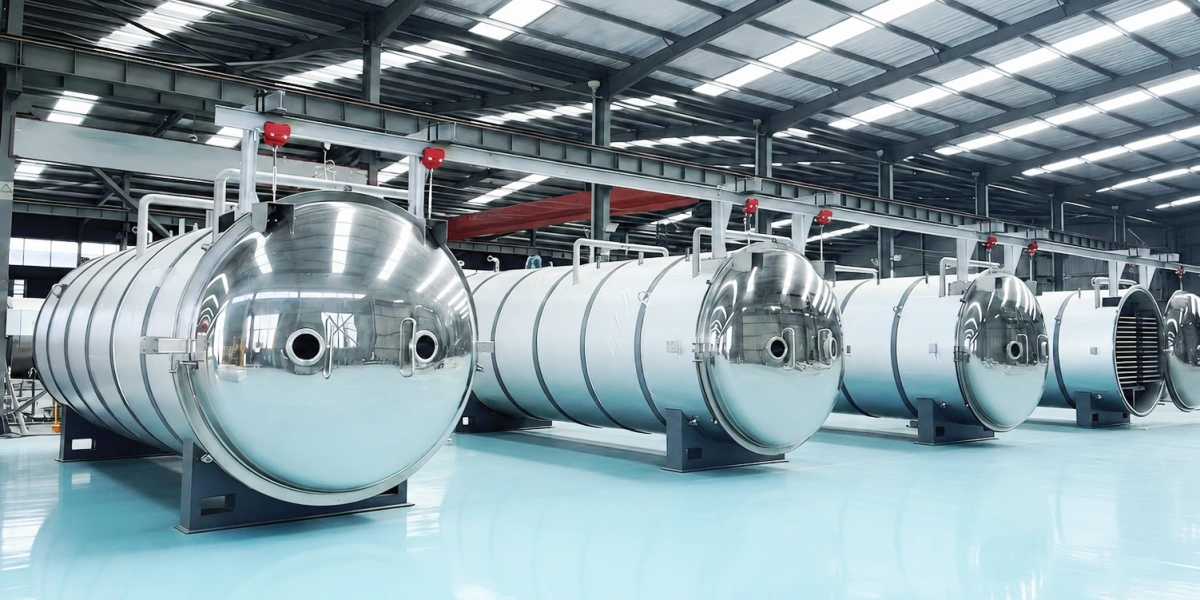
Zhengzhou Geliss Intelligent Equipment Co., Ltd. (Geliss) operates as a direct manufacturer with over 15 years of R&D and fabrication expertise in freeze-drying technology. We have always committed to a path of independent research and in-house manufacturing.
We firmly believe a truly reliable freeze dryer must be engineered for system-wide optimization right from the design phase, rather than merely assembling generic off-the-shelf components.
From the precise welding of the vacuum drying chamber and the engineering of the refrigeration layout, to custom PLC control programming and final machine calibration, every single step directly impacts your machine's stability across thousands of future drying cycles.
This is why we operate under our core philosophy: "Built by Engineers, Not Middlemen." This allows our global clients to communicate directly with the engineering teams who build the technology, bypassing multi-layered trading channels and fragmented information.
7. Contact the Geliss Engineering Team for Your Custom Solution
If you are planning a new freeze-drying installation or upgrading an existing production line, our team is ready to assist.
We provide:
-
Free equipment selection guidance aligned with your specific raw materials and capacity goals.
-
Customized production line configurations and full workshop layout planning.
-
Professional technical consulting on freeze-drying curves and temperature recipes for challenging high-moisture or high-sugar items.
-
Deep operational cost and ROI (Return on Investment) analysis based on local energy consumption.
-
One-on-one technical support directly from our factory engineering experts.
"Empowering every raw material to create higher value, and ensuring every investment yields long-term returns" is our unwavering promise to your business.
Comprehensive Guide to Selecting Commercial and Industrial Freeze Dryers: From Laboratory R&D to Ton-Scale Production
SEND MESSAGE