
Common Problems and Solutions for Vacuum Anomalies in Commercial Freeze Dryers
First and foremost, a vacuum anomaly does not necessarily mean there is a problem with the vacuum pump.
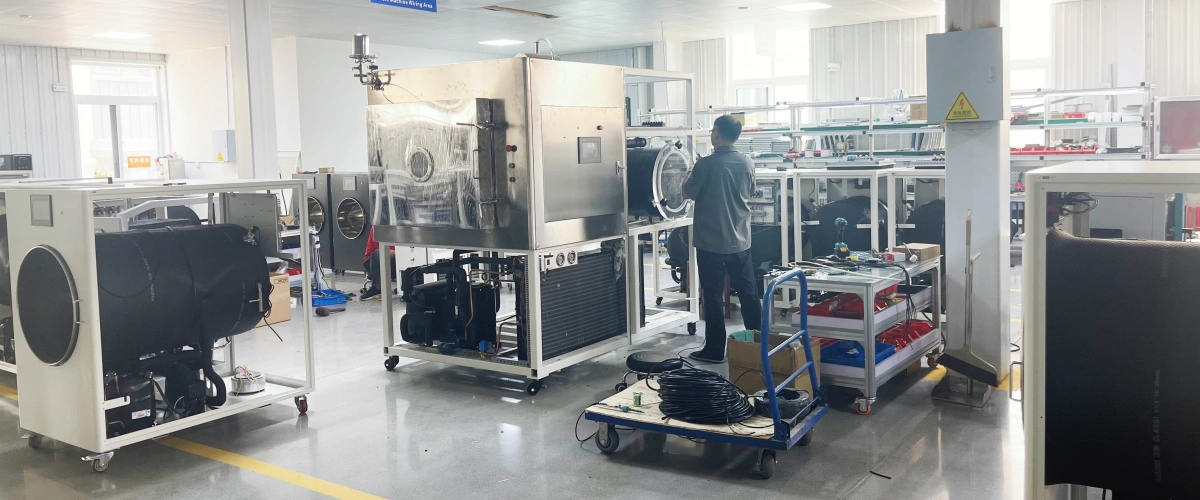
In the freeze-drying process, the vacuum system directly impacts drying efficiency, product quality, and equipment stability. When a machine exhibits slow vacuum pull-down, fails to reach the set vacuum threshold, or experiences a continuous pressure rise during operation, many people immediately suspect a vacuum pump failure.
In reality, however, the vacuum level reflects the operational health of the entire integrated system. The drying chamber door, drain valves, cold trap operating conditions, material load, and the vacuum pump itself—an abnormality in any single link can lead to a drop in vacuum performance.
1: If Pressure Fails to Drop at the Start of Vacuum Pumping, It Is Mostly Due to External Leakage
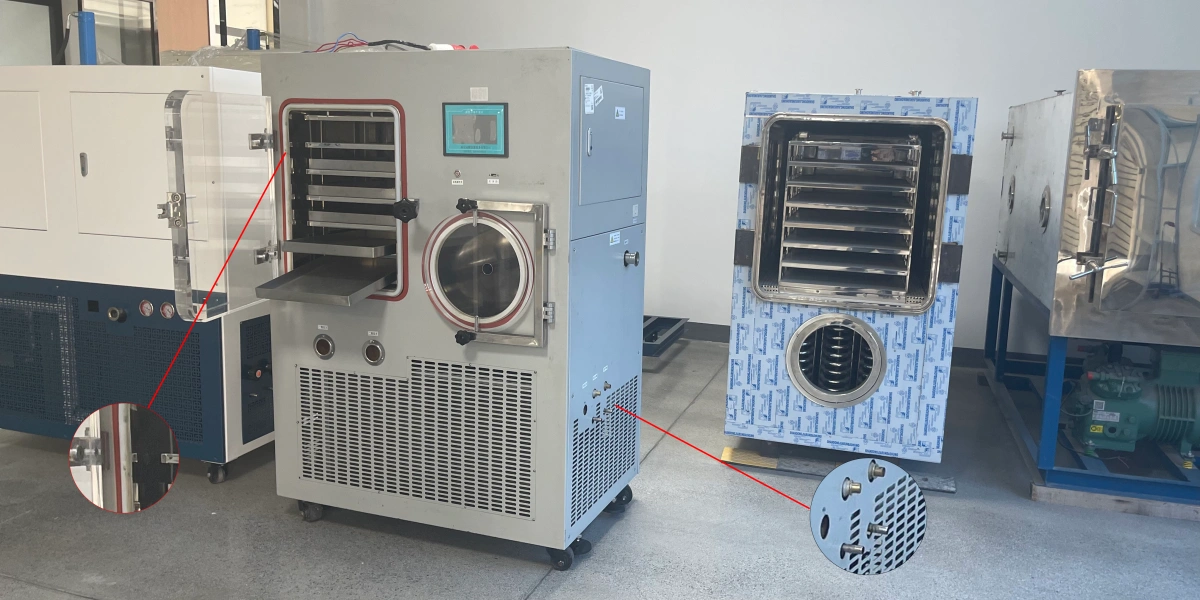
If the equipment fails to reach the set vacuum level during an unloaded test run, it usually indicates an external leak in the system. Before checking the vacuum pump, prioritize inspecting the following three areas for abnormalities.
1. Debris or Aging on the Chamber Door Gasket
The rubber gasket on the chamber door is the most common leakage point. When processing materials with high moisture content, such as meat or seafood, residues like oils, debris, and ice crystals easily adhere to the gasket surface. Even microscopic debris can compromise the seal. Furthermore, long-term use and continuous hot-and-cold cycles can cause the rubber gasket to age, deform, or crack, which also results in persistent leakage.
2. Drain Valve or Air Vent Valve Not Fully Closed
Over long periods of operation, the valve core may fail to shut completely due to scale build-up or impurities. This allows air to bleed in continuously, preventing the vacuum from ever reaching its target standard.
3. Incomplete Cold Trap Defrosting
Residual ice layers on the cold trap not only compromise refrigeration efficiency but can also obstruct the air evacuation channels, thereby reducing the vacuum pump's volumetric efficiency. This issue is particularly common during continuous production runs or when processing high-moisture materials.
Summary: The three items above constitute the most basic sealing inspections for a freeze dryer's vacuum system, and they represent the highest failure rates on-site. By systematically troubleshooting in the order of Gasket → Valves → Cold Trap, most initial vacuum pull-down anomalies can be resolved at this stage.
2: Structural Leakage Within the Equipment and Erroneous Data Judgments
If no abnormalities are found after inspecting the aforementioned components, yet an empty run still fails to pull a stable vacuum, the issue likely stems from loose seals in the equipment's internal mechanical structure or a misjudgment by the sensing system.
This scenario is characterized by a machine that "appears completely normal" on the outside, yet the vacuum consistently fails to meet standards or exhibits a persistent micro-leak that is difficult to locate through intuition alone.
1. Micro-Leaks Caused by Uneven Stress on the Flange Connecting the Vacuum Pump and Equipment
Following the commissioning of new equipment or after reassembly during maintenance, if the connection flange between the vacuum pump and the freeze dryer bellows is not properly aligned and installed, it can easily cause slight warping of the flange face. This deformation is usually invisible to the naked eye, but under negative pressure conditions, it creates a persistent, microscopic leak path.
-
Typical Manifestations: The initial vacuum pull-down speed appears normal, but the system can never reach its ultimate vacuum limit. Anomalies are typically discovered only when using leak detection fluids or conducting segmented isolation tests. The problem disappears once the flange is uniformly retightened.
-
Troubleshooting Recommendations: Retighten the flange bolts using a diagonal cross-pattern. Inspect whether the sealing gasket is misaligned or locally pinched. Double-check the primary manifold connection flanges or bellows interfaces.
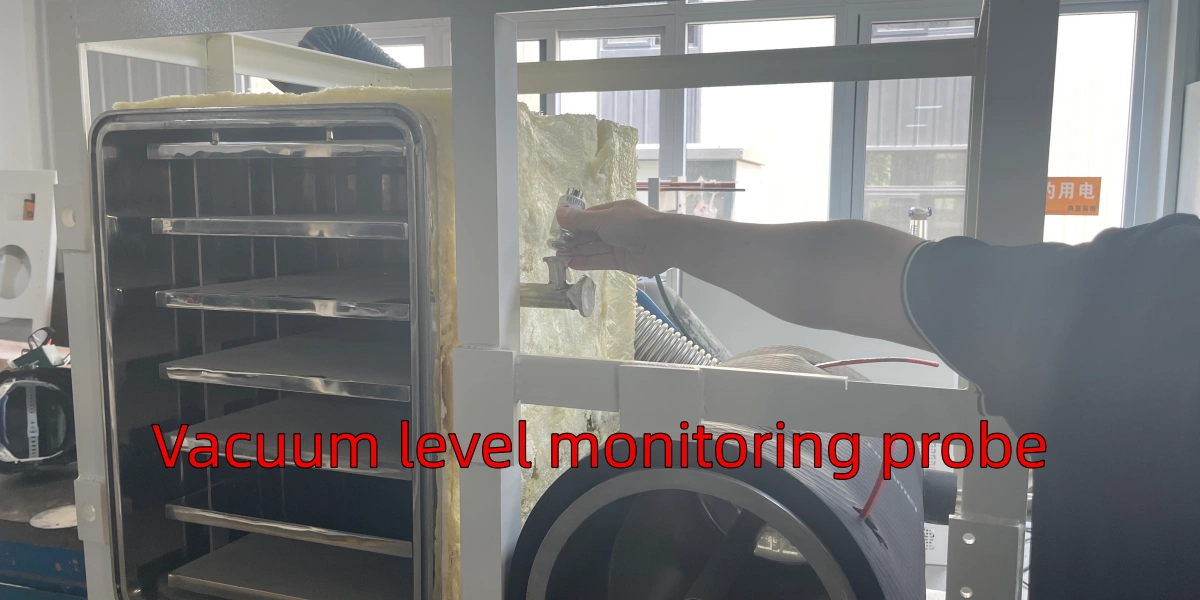
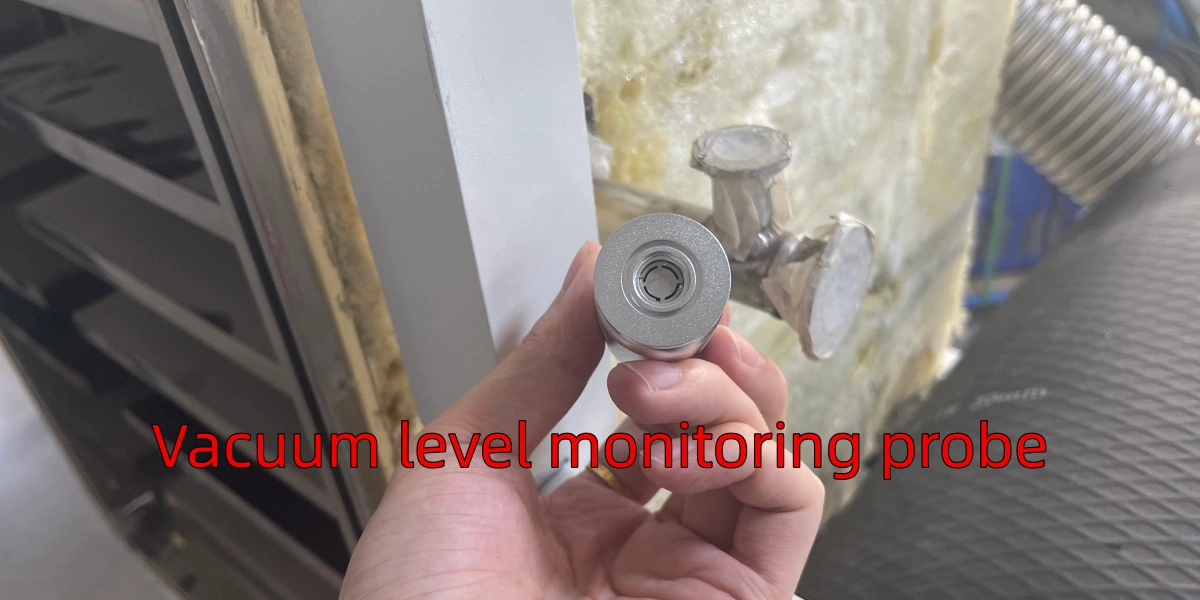
2. "False Vacuum Anomalies" Caused by Vacuum Sensor Contamination
During prolonged operations, Pirani or McLeod gauges are highly susceptible to contamination from water vapor or volatile compounds. Once a film-like layer forms and coats the sensor probe surface, the sensor readings distort, leading to a false display showing that "the vacuum is not up to standard," even though the actual system pressure may have already reached normal parameters.
-
Common Misjudgments: The instrument panel displays a vacuum level that cannot be pulled down, yet the product processing and system operations proceed normally. Replacing the sensor instantly restores normal data readouts. Noticeable reading discrepancies occur between different sensors within the same batch.
-
Troubleshooting Recommendations: Clean or replace the vacuum gauge probe. Cross-reference the mechanical vacuum gauge readings with the electronic sensor data. Check for any condensate backflow draining into the sensor.
3. Long-Term Vibration Inducing Micro-Cracks in Drying Chamber Welds
Freeze dryers continuously operate under harsh, compound stress conditions combining structural negative vacuum pressure with mechanical vibrations from both the compressor and the vacuum pump. If the welding craft or structural reinforcement is inadequate, the weld zones may develop micro-fissures under long-term alternating cyclic stress, forming a continuous, slow vacuum leak.
-
Typical Features: The leak rate is extremely slow, making rapid positioning exceptionally difficult. The leak is imperceptible when the machine is powered off but intensifies once operational. Standard soapy water leak tests rarely detect it on the first attempt.
-
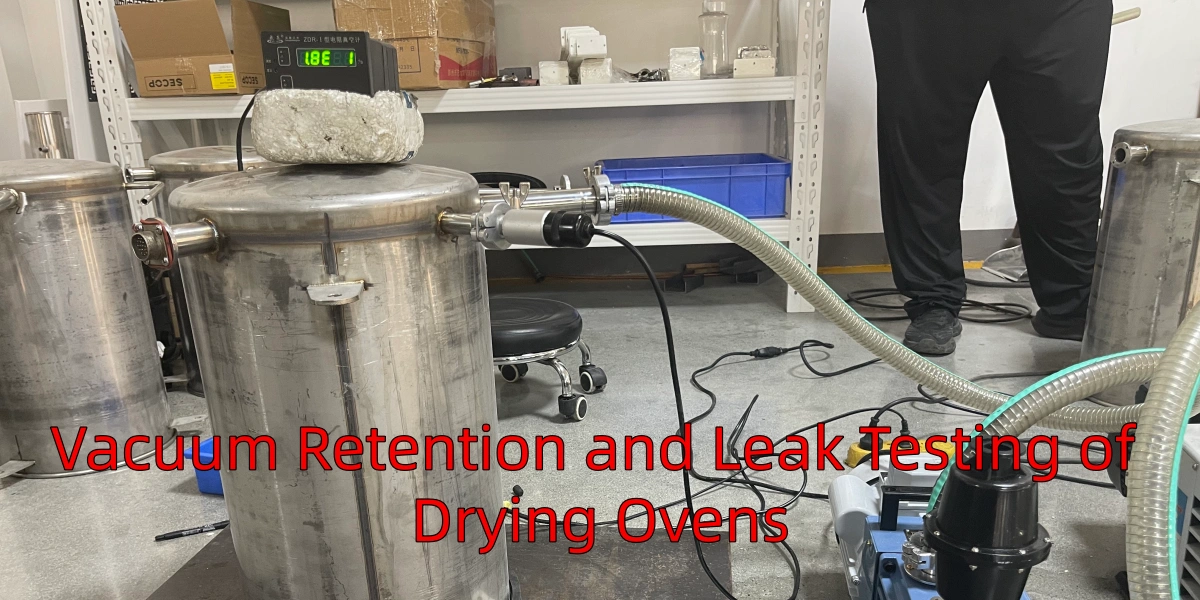
Troubleshooting Recommendations: Perform zoned pressure-hold tests on suspect weld seams. Inspect high-stress concentrations (such as the chamber bottom and manifold support anchors). When necessary, execute helium leak testing or segmented isolation checks.
4. Micro-Seepage or Gasket Aging in Bellows and Quick-Disconnect Couplings
Bellows and threaded unions are typical "long-term static leak points." Under the continuous action of high-low temperature cycling and long-term vibration, bellows can experience micro-porosity, while the sealing materials (such as Teflon tape or sealing washers) at connections gradually age and fail.
-
Typical Manifestations: The leak rate is generally slow but continuous. Replacing the flexible hoses or renewing the seals immediately restores normal operation. The problem demonstrates a cyclical and recurring pattern.
-
Troubleshooting Recommendations: Periodically inspect the bellows surfaces for signs of fatigue. Replace aged sealing washers promptly or re-wrap threaded interfaces with fresh sealing tape. Prioritize inspecting connection segments that undergo frequent hot-and-cold thermal transitions.
Systematic Troubleshooting Order: Flange Seals → Sensor Data → Chamber & Cold Trap Weld Structures → Bellows Flexible Connections. Neglecting this layer of troubleshooting easily leads to a cycle of "repeated repairs with persisting issues," making it one of the most time-consuming fault categories in freeze-drying operations.
3: How to Resolve a Sudden Drop in Vacuum Level During Normal Equipment Operation
If the machine passes empty testing—rapidly reaching the set vacuum or ultimate vacuum limit without issues—yet the vacuum level suddenly climbs continuously or fails to stabilize once product loading begins (especially when entering the secondary desorption drying phase), external equipment leakage can generally be ruled out.
The vast majority of these faults stem from the state of the material, the loading method, or the freeze-drying recipe configuration. In essence, it is not a deficiency in the vacuum system's performance, but rather that the volume of water vapor generated by the material in a short timeframe has overwhelmed the condensation capacity of the cold trap.
1. Insufficient Material Pre-Freezing Time (Core Temperature Fails to Reach Below the Eutectic Point)
The ultimate goal of the pre-freezing stage is to ensure that all free water within the material is completely solidified. Taking high-moisture materials like fresh meat and seafood as examples: if they enter the vacuum environment before their core temperature drops below the eutectic point, the unfrozen moisture will flash vaporize due to the sudden drop in pressure, causing a phenomenon similar to "bumping" or "flash boiling." This rapid release of massive water vapor volumes spikes the drying chamber pressure, causing the vacuum level to plummet. This typically happens due to rushed production schedules shortening pre-freeze times, or because excessively thick material slabs prevent complete core freezing.
2. Overloading Material Beyond the Cold Trap’s Condensation Capacity
To boost single-batch yields, many facilities increase the loading thickness on trays or exceed the maximum shelf load capacity. However, the ice-catching capacity of the cold trap is a fixed physical limit.
When primary drying hits its sublimation peak, if the short-term water vapor generation outpaces the cold trap's design capacity, the excess water vapor cannot condense in time. It remains trapped inside the drying chamber, forcing system pressure upward.
Furthermore, this accelerates vacuum pump oil emulsification and causes material structure collapse, triggering an expensive chain reaction of losses. For high-moisture products, controlling the single-layer loading thickness must always take priority over blindly pursuing batch volume.
3. High-Fat Materials Releasing Non-Condensable Gases That Interfere with Vacuum
When processing high-fat raw ingredients such as salmon or duck skin, the combination of low pressure and continuous heating causes these materials to release trace amounts of volatile organic compounds. These gases cannot condense into frost inside the cold trap like water vapor does. As these non-condensable gases accumulate, the load on the vacuum pump scales up. Even if the machine has zero physical leaks, you will observe a drop in ultimate vacuum capability or widened vacuum fluctuations.
When processing high-fat or high-oil products, the heating ramp rate and drying program must be adjusted based on material characteristics to prevent sudden, massive releases of volatile gases that destabilize the vacuum system.
Chapter 4: Why Does the Vacuum Level Keep Worsening Even When There Is No Leakage?
Throughout the freeze-drying process, the vacuum system does not operate in isolation. The shelves supply heat to the material, while the cold trap rapidly captures the water vapor generated via sublimation; a dynamic equilibrium must be maintained between the two. If either link falters, the vacuum level is always the first indicator to react.
If the machine seals are sound and the material is thoroughly pre-frozen, yet vacuum fluctuations persist, the issue most likely lies within the refrigeration system parameters or process balance.
1. Rising Cold Trap Temperature Prevents Timely Water Vapor Condensation
The primary function of the cold trap is to rapidly catch sublimated water vapor. If compressor heat dissipation efficiency drops, the condenser accumulates heavy dust, or the refrigerant charge is low, the cold trap cannot maintain its design temperature range. Uncondensed water vapor remains in the drying chamber, causing the vacuum to degrade. This excess water vapor is then pulled into the vacuum pump, accelerating oil emulsification or causing mechanical pump damage.
2. Aggressive Shelf Heating Ramps Generating Flash Volatilization
The key to primary drying is not heating as fast as possible, but rather driving a stable, continuous sublimation rate. If the freeze-drying recipe's heating curve is configured too aggressively, the rapid rise in shelf temperature releases a huge volume of water vapor in a short window. When this outstrips the processing limits of the cold trap and vacuum system, chamber pressure surges and vacuum levels fluctuate. High-moisture products require gentle heating profiles to ensure a controlled sublimation process.
3. Accumulation of Residual System Gases Blocking Water Vapor Flow
During continuous freeze-dryer operations, non-condensable gases gradually accumulate inside the machine. When these gases gather around the cold trap area, they create a blanket effect that hinders water vapor from migrating smoothly toward the condenser plates. This leaves a portion of vapor uncaptured, increasing the overall load on the vacuum system. While this does not present as a physical leak, it causes the ultimate vacuum to degrade and extends pull-down times.
4. Excessive Shelf Temperature Variance Leading to Localized Product Melt
Shelf temperatures must remain as uniform as possible during freeze-drying. If the heat transfer fluid circulation is impeded or air pockets exist within the internal manifold, certain shelf sections may heat rapidly while others remain cold. The high-temperature zones release large volumes of water vapor prematurely, disrupting the vacuum equilibrium of the entire drying chamber. This issue typically manifests as inconsistent drying quality within the same batch, with some products showing localized structural collapse or moisture retention.
5. Excessive Ice Accumulation on the Cold Trap Choking Evacuation Channels
The ice layer on the cold trap surface thickens continuously as freeze-drying progresses. If the material's moisture load is too high or continuous run times are too long, the ice buildup can bridge and physically constrict the air evacuation channels. This chokes air and vapor flow, leading to a steep decline in pumping efficiency. Even if the vacuum pump runs perfectly, vacuum establishment slows down significantly, and maintaining stability becomes difficult. Defrosting thoroughly after every single batch cycle is mandatory to prevent thick ice accumulation.
Chapter 5: Decline in Performance or Damage to the Vacuum Pump
⚠️ Crucial Operational Note: When a vacuum pump exhibits a fault, it is frequently the consequence of system imbalances, rather than the root cause. Many instances of pump performance decline stem from long-term exposure to water vapor, oil contamination, or operating under prolonged high-load conditions. Confirm the true root cause before deciding to replace an expensive pump.
1. Pump Oil Emulsification Stripping Evacuation Capacity
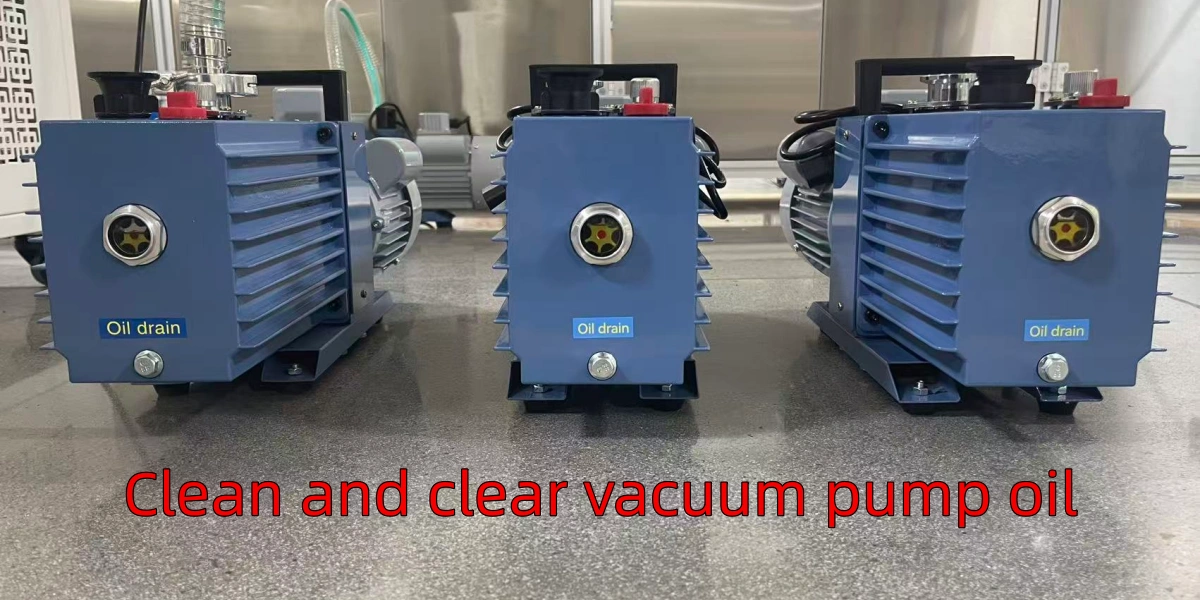
Oil emulsification is the single most common vacuum pump fault. When the cold trap's condensation efficiency slips, massive volumes of water vapor bypass the trap and enter the vacuum pump chamber, mixing directly with the pump oil. This turns the clear oil into a milky white emulsion. Once emulsified, the oil's sealing and lubrication properties degrade catastrophically. The pump slows down and fails to reach its designated ultimate vacuum. This occurs frequently when processing high-moisture items like fresh meat and seafood. If the oil appears white, cloudy, or heavily foamed, change the pump oil immediately and inspect the cold trap.
2. Clogged Exhaust Filter Choking Exhaust Efficiency
The exhaust filter separates oil mist while ensuring the vacuum pump vents smoothly. Over extended run hours, the filter element becomes choked with oil residue and particulates, steadily increasing backpressure. Although the pump motor continues running normally, internal gases cannot vent efficiently, causing a sharp drop in volumetric efficiency. If pull-down times grow longer, pump temperatures run hot, or the pump operation develops a deep, labored sound, check if the exhaust filter has reached its replacement interval.
3. Internal Component Wear Reducing Ultimate Vacuum Limits
Running under prolonged high-load states, delayed oil changes, and continuous ingestion of moisture-laden gases accelerate internal mechanical wear. As clearances between vanes and the pump housing expand, internal blow-by leakage increases. Even with continuous operation, the pump can no longer pull or maintain a stable high vacuum. This failure mode does not occur overnight; it presents as a gradual slowdown in vacuum pull speed, a creeping rise in ultimate pressure limits, increased operating noise, and elevated vibrations. Once oil and filter maintenance factors are ruled out, the pump requires professional rebuilding or component replacement.
Standard Operating Procedure (SOP) for Vacuum Anomalies
Please troubleshoot systematically from simple to complex, and from external to internal elements. Confirm each stage is fully normal before advancing to the next to eliminate redundant teardowns and misdiagnoses.
| Troubleshooting Stage | Inspection Focus | Key Evaluation Items | Judgment Standard | Anomalous Expressions | Corresponding Chapter | Handling Action |
|---|---|---|---|---|---|---|
| 1. Basic Seal Inspection (Static Leak Points) | Rapidly isolate high-frequency external leak points. | Chamber door gasket, drain/vent valves, cold trap defrost status. | Unloaded vacuum pull-down ≤ 100 Pa (or machine limit). | Slow vacuum pull-down or ultimate vacuum rests above target limit. | Chapter 1 | Clean or replace seals; fully close all valves; perform a complete defrost cycle. |
| 2. Deep Mechanical Inspection (Hidden Leaks & False Data) | Isolate concealed issues across flanges, welds, and sensors. | Flange alignment/stresses, vacuum sensor condition, weld seams & chamber shell integrity, bellows & unions. | Pressure-hold test shows stable vacuum; sensor readings align with mechanical gauges. | Pressure slowly climbs during isolation hold; sensor readings drift; persistent micro-leaks. | Chapter 2 | Realignment/tightening of flanges; clean/replace vacuum sensor; reweld fractures; replace aged bellows. |
| 3. Material & Recipe Inspection (Post-Loading Production Issues) | Isolate vacuum overloads caused by product state or loading configurations. | Core pre-freezing depth, single-batch loading volume, high-fat volatile gas impacts. | Unloaded machine runs perfectly; loaded run tracks within recipe design limits. | Vacuum drops or surges upon loading; extended drying times; product collapse/wetback. | Chapter 3 | Extend pre-freeze soak times; reduce single-layer tray thickness; optimize recipe heating ramps. |
| 4. Refrigeration & Thermal Balance (Thermodynamic Inversion) | Verify refrigeration and thermal compensation match perfectly. | Cold trap temperatures, shelf heating ramp steps, non-condensable gas accumulation, shelf temp variance, ice thickness. | Cold trap stays ultra-low; shelf temperatures are highly uniform; ice layer thickness remains safe. | Cold trap temperature spikes; excessive heating rates; vacuum fluctuations; localized shelf melt. | Chapter 4 | Service refrigeration systems; smooth out heating ramps; purge non-condensable gases; optimize silicone oil loops. |
| 5. Vacuum Pump Inspection (Power Source Evaluation) | Isolate performance degradation of the vacuum pump itself. | Pump oil emulsification level, exhaust filter condition, vane & chamber wall wear. | Pump oil remains clear; exhaust vents cleanly; ultimate vacuum and pump speed meet factory specifications. | Oil turns milky white; high exhaust backpressure; slow pumping speed; elevated noise/vibration. | Chapter 5 | Flush and replace vacuum pump oil; renew exhaust filters; rebuild or replace worn internal components. |
| 6. Unresolved Issues | Advanced diagnostic testing or expert manufacturer support required. | Manifold sizing/design flaws, advanced leak detection (Helium mass spectrometry), system aging evaluation. | Professional diagnostics pinpoint specific underlying engineering faults. | All previous steps check out normal, yet vacuum performance remains deficient. | Full Summary | Contact the equipment manufacturer or a specialized technical team for deep engineering diagnostics. |
Chapter 6: Mitigating Vacuum Anomaly Alarms at the Source — Equipment Design Prevents Maintenance Headaches
As demonstrated by the preceding technical analysis, most vacuum level anomalies do not occur because a single component suddenly breaks. Instead, they are the collective output of interactions across system sealing, refrigeration, heating controls, recipe profiles, and the vacuum assembly.
For enterprises focused on long-term, predictable production, the true value lies not just in knowing how to troubleshoot a failure, but in whether the equipment was engineered to mitigate these risks during its design phase.
"Built by Engineers, Not Middlemen" — The Geliss Manufacturing Ethos
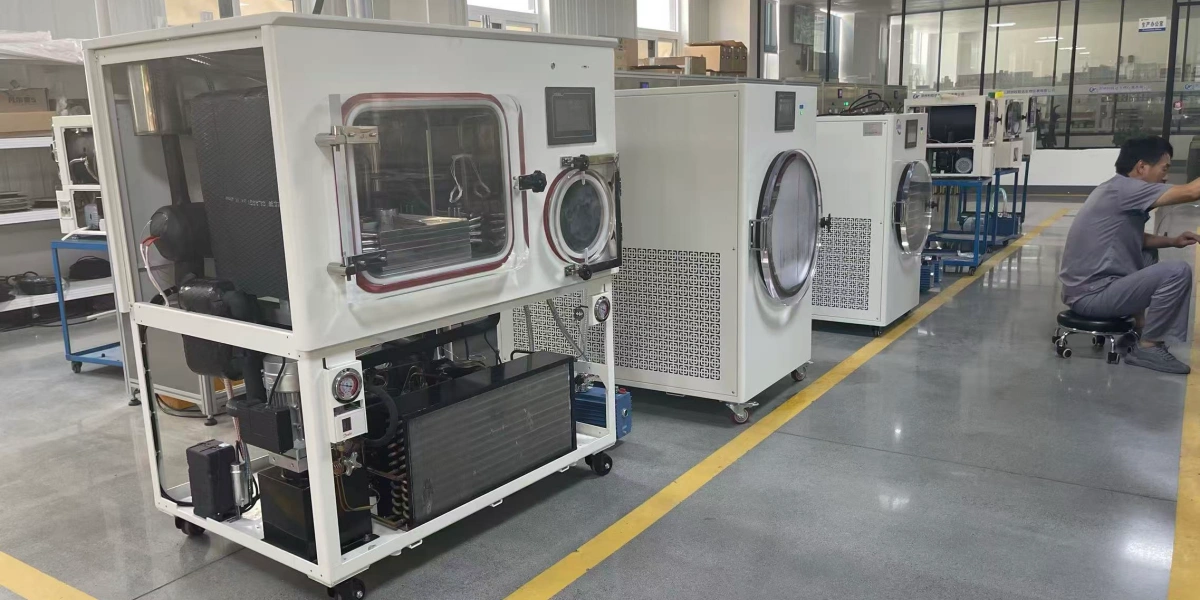
Backed by more than 15 years of dedicated vacuum freeze-drying machinery R&D and manufacturing experience, Geliss handles everything from structural chamber fabrication to automated control software development via our in-house engineering teams. We focus on driving down failure probabilities at the blueprint stage rather than relying on reactive field maintenance.
Geliss has established a comprehensive product line spanning laboratory R&D, pilot scaling, and massive commercial operations:
-
HFD Series: Optimized for product R&D, small-scale artisan batches, and brand market-testing phases.
-
Laboratory Series: Delivers high-precision thermal and vacuum monitoring interfaces to satisfy rigorous recipe development and validation needs.
-
Pilot & Industrial Series (ZLGJ): Tailored for continuous, large-scale commercial production, with targeted optimizations in structural stability, energy efficiency, and extended runtimes.
1. Highly Efficient Cold Trap Engineering
To handle high-moisture products, Geliss industrial-scale systems deploy a -75°C ultra-low temperature cold trap system, significantly boosting water vapor capture kinetics and keeping moisture loads away from the vacuum pump. For lines continuously processing meats, seafood, or premium pet foods, this design dramatically drops oil emulsification frequencies and extends scheduled maintenance windows.
2. Silicone Oil Circulation Systems for Flawless Thermal Uniformity
Geliss industrial series units utilize closed-loop silicone oil heating manifolds. Compared to legacy electric element setups, this approach eliminates temperature stratification across shelves, delivering perfectly uniform heat distribution. Under normal operating conditions, shelf temperature variance is tightly controlled within ±1°C, preventing localized melt-collapse, uneven drying, and vacuum fluctuations while securing absolute batch consistency.
3. Reinforced Heavy-Duty Sealing Architecture
Geliss drying chambers undergo strict full-penetration welding protocols. Before leaving our factory floors, every single unit is subjected to Helium Mass Spectrometry Leak Detection, scanning all weld seams and vacuum lines to eliminate micro-leak vectors caused by material stress or welding micro-voids over years of continuous production. This structural robustness translates directly into high operational uptime and minimal lifecycle maintenance costs.
Engineering Consultation & Support
A vacuum anomaly is merely a symptom; the true root causes are frequently hidden within structural designs, process settings, and thermodynamic balances. While establishing scientific SOPs enables rapid field troubleshooting, investing in a systematically engineered machine avoids these operational bottlenecks altogether.
💬 [Connect with the Geliss Engineering Team today to receive specialized equipment configuration advice, facility floor planning, and customized freeze-drying process support tailored to your product lines.]
SEND MESSAGE