
Unlocking the Business & Technical Logic Behind the Global Pet Food Freeze-Drying Boom
[Introduction]
Over the past few years, we have been closely monitoring data from global pet product exhibitions and cross-border e-commerce. Crucially, when cross-referencing Google Trends search curves with Euromonitor International’s global pet consumption reports, it becomes clear that freeze-dried pet food did not become popular overnight. This trend is not merely a simple product upgrade, but the inevitable result of interwoven global macroeconomic shifts.
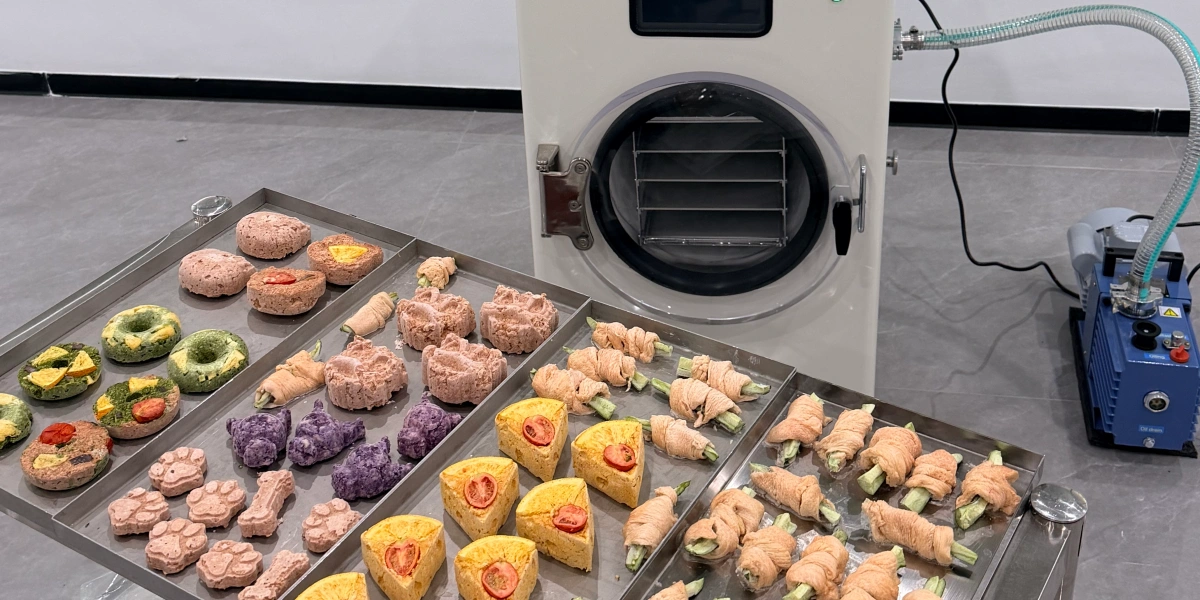
Chapter 1: Global Declining Birthrates under Macro Backgrounds and the Arrival of the "Pet Humanization" Era
Looking at the consumer market from a global perspective, the underlying logic behind the explosion of any market trend is invariably a shift in human needs. The rapid growth of the freeze-dried pet food market is a direct reflection of global demographic structural changes manifested in the consumer market. A declining birthrate has fueled a surge in the demand for "human emotional companionship."
1. Global Birthrates Continue to Decline, Expanding the Emotional Gap
According to data from the United Nations Population Division, in the present year of 2026, the global average number of children born per woman is 2.2. In the middle of the last century, this figure exceeded 5—meaning this number has been slashed by more than half in just sixty years. In demography, there is a concept called the "replacement level," which means an average of 2.1 children per woman is required to maintain a stable population size long-term. While 2.2 appears slightly above this line, it is heavily skewed by high population density regions such as Africa and India—in Europe, the birthrate in regions like Italy is only 1.18, while in Spain and Poland, it is a mere 1.1.
Continuously falling birthrates combined with an accelerating aging population are reshaping the micro-structures of families worldwide. Family sizes are shrinking, single-person households are rising, and the gap in "emotional companionship" is widening accordingly. Against this backdrop, owning a pet is evolving from a mere "lifestyle choice" into a core vehicle for filling emotional voids.
2. How "Pet Humanization" Drives Industry Product Premium Pricing
Industry reports from APPA (American Pet Products Association) and FEDIAF (European Pet Food Industry Federation) reveal the exact same trend: Pet Humanization is fundamentally altering the underlying logic of the pet products industry. As an essential expenditure in pet ownership, pet food growth is particularly prominent.
In 2024, 21% of cat owners threw birthday parties for their pets, a 250% increase compared to 2018. Sales of premium dog and cat food grew by 5% and 9% respectively, while sales of basic formulas both declined. Pet owners are defining their pets' dietary structures in the same way they raise children—more natural, more nutritious, and less processed. This is the core source of premium pricing margins for freeze-dried pet food.
Chapter 2: Limitations of Traditional Pet Food and the Rise of Fresh Pet Food Trends
Once consumers mentally transition to treating pets like their own children, the nutritional flaws of traditional low-cost pet foods inevitably come under comprehensive market scrutiny.
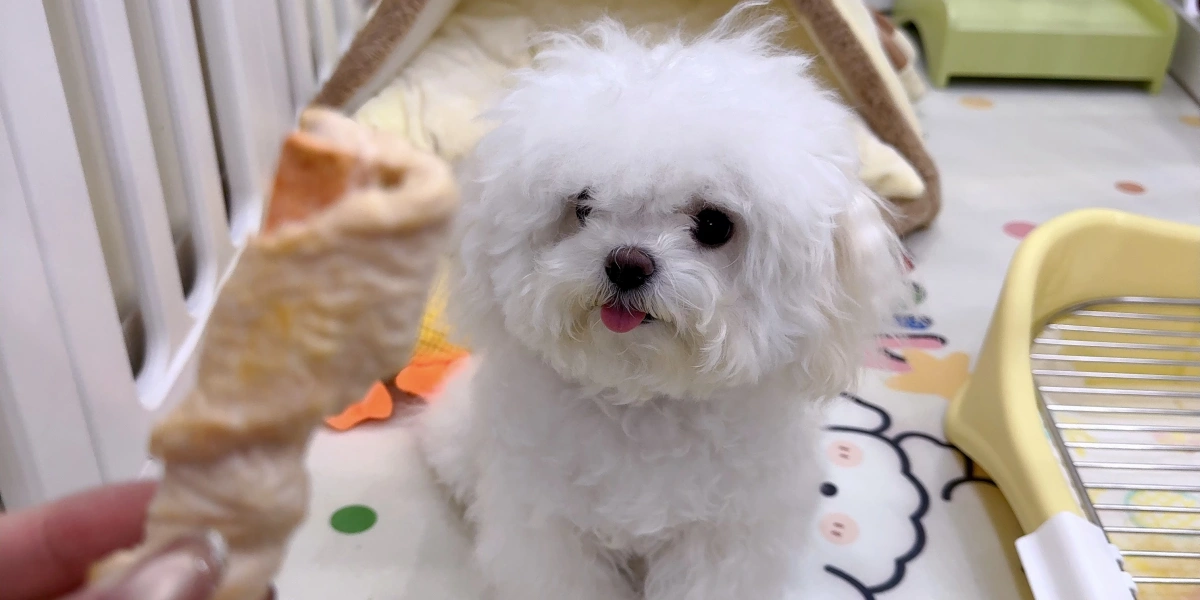
1. The Natural "Mismatch" Between High-Temperature Processed Food and the Instincts of Carnivores like Dogs and Cats
Traditional extruded kibble and low-to-medium temperature dehydration processes are inherently solutions engineered for mass production and low-cost warehousing. Extrusion temperatures typically range from 100°C to 110°C. While this temperature range destroys most harmful bacteria and extends shelf life, high-temperature processing simultaneously destroys most of the nutrients in the food.
Research indicates that after high-temperature and high-pressure sterilization, Vitamin A, Vitamin E, and multiple B-complex vitamins (thiamine, riboflavin, etc.) in pet canned food degrade significantly under high heat.
Even more critical is the Maillard Reaction—a chemical reaction between amino acids and reducing sugars at high temperatures. This not only reduces the bioavailability of essential amino acids like lysine, but its reaction products may also promote the degradation of taurine by intestinal microbiota. Taurine is a core nutrient that canines and felines, especially cats, cannot synthesize on their own and must obtain from their diet. While industrialized mass production solves the problem of "feeding enough," it sacrifices the possibility of "feeding well."
2. The Global Rise of Fresh Diets and Their Real-World Pain Points
In recent years, along with the popularization of scientific knowledge regarding dogs and cats as carnivores, "raw feeding" has shifted from the margins to the mainstream. According to a market research report published by The Business Research Company, the global raw pet food market size reached approximately $3.68 billion USD in 2024, and is projected to grow to approximately $6.2 billion USD by 2029, with a compound annual growth rate (CAGR) of approximately 11% during the forecast period. This sustained growth demonstrates that natural, minimally processed, and highly nutritious pet food is becoming a major developmental direction in the global pet food market.
However, traditional fresh raw meat has always faced real-world pain points: high cold chain transportation costs, vulnerability to bacterial and viral contamination (especially Salmonella and Listeria), and inconvenient storage. At this juncture, the market demands an ultimate alternative that balances "all-natural nutrition" with "convenient storage."
The value of the freeze-drying process shines precisely at this moment. Low-temperature drying preserves the active nutritional components of fresh ingredients, while the dehydrated meat leaves no breeding ground for bacteria, perfectly achieving ambient storage and convenient transportation.
Chapter 3: Why Can "Freeze-Dried Pet Treats" Serve as the Golden Entry Point for Emerging Brands?
Under the contradictory conditions where fresh pet treats are nutritionally rich but difficult to store, freeze-drying technology arguably provides the perfect solution. However, for startups, why is it recommended to pivot from "treats" rather than "staple food"? The answer lies hidden within three commercial realities.
1. Treats Are an Emotional Consumer Purchase for Pet Owners
The choice of staple pet food is rational—balanced formulas and comprehensive nutrition are factors every pet owner must evaluate, and abruptly changing formulas introduces inherent risks.
Treats are different. Freeze-dried treats made from single fresh raw ingredients like chicken breast cubes, salmon chunks, and beef liver slices have low decision-making costs. Pet owners buy them not to fill their cats' or dogs' stomachs, but for the "reward" and "moment of joy" during interactions with their beloved pets. In industry terms, this provides customers with emotional value.
The pet treat sector itself is expanding rapidly. High-protein, all-natural ingredients, and low-processed products are becoming the core drivers accelerating industry growth. Freeze-dried pet treats have already become an essential component of the premium pet food market, unlocking more market opportunities for emerging brands and OEM/ODM manufacturers.
2. The Freeze-Drying Process Turns a "Cold Chain Burden" into a "Logistics Advantage"


Meat processed through freeze-drying removes approximately over 95% of its moisture. The weight of the finished product is reduced by more than 80%—meaning one ton of raw fresh meat leaves less than 200 kilograms of finished freeze-dried product.
This means your shipping costs will be drastically reduced. For brands operating in cross-border e-commerce that need to sell products to overseas markets via sea or air freight, the saved transportation expenses will accumulate into a substantial sum. At the same time, freeze-dried products do not require cold chain logistics and can be shipped ambient by sea, saving cold-storage reefer rent while eliminating the risk of cargo damage due to cold chain breakdowns.
3. The R&D Barrier for Single-Source Meat is Far Lower Than That for Full-Price Staple Food
A successful staple pet food formula requires precise calculations of amino acid, mineral, and vitamin balances—even a slight deviation results in nutritional imbalance. Producing freeze-dried pet treats merely requires handling a single premium raw fresh ingredient properly. Pure chicken breast, beef liver, or duck breast—one ingredient constitutes one product. This model allows startup brands to swiftly validate a Minimum Viable Product (MVP) loop within a limited budget, validating market demand with minimal R&D investment.
It bypasses the need for complex formula engineering teams and lengthy testing cycles. By using high-quality raw ingredients and a reliable freeze-dryer, you can clearly convey a brand story that states, "There is only one single ingredient in this bag of treats."
Chapter 4: Core Scientific Advantages of Freeze-Drying vs. Traditional Hot-Air Dehydration
Freeze-dried pet treats can command prices 3 to 5 times higher than ordinary dehydrated meat jerky. The core reason is not merely marketing spin, but the distinct nutritional value delivered by different food processing methods.
1. A "Nutritional Escape Route" Under 10 Pa of Pressure
Under standard atmospheric pressure, ice melts to water, which then evaporates to water vapor. However, when the pressure drops below 10 Pa, solid ice can directly sublimate into a gaseous state, bypassing the liquid phase entirely. The freeze-dryer rapidly freezes raw ingredients to -30°C to -50°C, then draws a vacuum to within 10 Pa while slowly applying heat. The ice crystals sublimate directly into water vapor and are drawn away. Throughout the entire process, there is no "boiling" or "baking"; thus, protein molecules avoid thermal denaturation, and active enzymes and vitamins are preserved.
In contrast, hot-air drying relies on continuous heating at 60–100°C, causing massive losses of heat-sensitive nutrients.
2. How Freeze-Drying Overcomes the "Case Hardening Effect"
Fresh meat has a moisture content of roughly 70% to 80%. During hot-air dehydration, surface moisture evaporates first, forming a dense, hard outer shell that traps internal moisture tightly inside. The resulting product is dry on the outside but wet on the inside, and this residual internal moisture continually triggers mold growth and lipid oxidation over time.
Freeze-drying sublimates moisture directly from a solid state. Because there is no preferential surface drying stage, simultaneous internal and external dehydration occurs, completely eliminating any opportunity for case hardening to develop.
3. Excellent Rehydration Performance Driven by the Porous Structure of Freeze-Dried Food
Once ice crystals sublimate, they leave behind countless microscopic pores in their original positions, forming a sponge-like porous structure. Pets can chew it effortlessly due to its crispness, and soaking it in warm water for 3 to 5 minutes restores it close to the texture of fresh meat. For cats that are naturally reluctant to drink water, rehydrated freeze-dried treats double as a highly effective hydration method.
4. Locked-in Nutrients and Flavors, Driving Palatability to the Max
Because freeze-drying operates at low temperatures throughout, volatile flavor compounds suffer virtually zero loss. Without the need for added artificial palatants, the pure, authentic aroma of raw meat is fully sufficient to conquer even the most selective dogs and cats.
At a Glance: Freeze-Drying Technology vs. Hot-Air Dehydration
| Comparison Dimension | Freeze-Drying Technology | Hot-Air Dehydration |
|---|---|---|
| Processing Principle | Sublimation under 10 Pa (Solid Ice → Vapor) | Evaporation via Hot Air (Liquid Water → Vapor) |
| Processing Temperature | Frozen at -30°C to -50°C, low-temp sublimation | Continuous hot air at 60–100°C |
| Nutrient Retention Rate | ≥95% | 30%–50% loss |
| Protein Retention Rate | Approx. 98% | Approx. 70% |
| Vitamin B1 Retention | 72% higher than high-temp kibble | Easily degraded by high heat |
| Taurine Retention Rate | ≥90% | Causes massive losses |
| Appearance | Retains original shape and vibrant color | Shrinkage, discoloration |
| Internal Structure | Sponge-like porous structure, light and crispy | Dense and hard, difficult to chew |
| Rehydration Time | 3–5 minutes to restore fresh meat texture | Virtually no rehydration capability |
| Flavor Source | Pure meat aroma, no palatants needed | Maillard reaction cooked aroma |
| Moisture Content | 2%–5% | 6%–20% |
| Storage Stability | Long-term stable at ambient temperature | Vulnerable to oxidation and mold risks |
| Product Premium Margin | Pricing is typically 3–5 times that of dehydrated goods | High-volume low-margin, limited premium |
In summary, the gap between freeze-drying and dehydration is not a matter of being "slightly better"—it is a fundamental difference in physical principles. One relies on low-temperature sublimation to lock in nutrients, while the other uses high-temperature hot air to force out moisture. Consequently, one commands a premium price, while the other can only compete on high-volume low-margins. For pet treat entrepreneurs looking to build a brand, this decision is not a difficult one to make.
Chapter 5: Process Control in Commercial Freeze-Drying and Common Pitfalls in Mass Production
A flawless laboratory sample does not mean it can be directly replicated for commercial manufacturing on the workshop floor. When scaling up from laboratory trials to mass production, most inexperienced small enterprises fall headfirst into industrial traps that outsiders fail to see.
1. Standard Process Curves for Industrial-Scale Freeze-Drying
Freeze-drying is far more complex than just "freezing it, pulling a vacuum, and waiting for the results." A complete industrial-grade freeze-drying curve is divided into three distinct phases:
-
Pre-Freezing (-30°C to -40°C): Once fresh meat enters the drying chamber, it undergoes flash freezing, causing moisture to lock into tiny ice crystals. The smaller the ice crystals, the more uniform the microscopic pores left behind after sublimation, yielding superior product crispness and rehydration. Slow freezing creates large ice crystals that puncture cell walls, resulting in massive drip loss upon thawing.
-
Primary Drying (Sublimation Drying): The system pulls a vacuum and applies heat to the shelves, prompting ice crystals to sublimate. This step extracts free water—accounting for roughly 90% to 95% of the ingredient's total moisture. Shelf temperatures must be precisely maintained below the freezing point to guarantee ice crystals do not melt.
-
Secondary Drying (Desorption Drying): The final step desorbs "bound water" chemically bonded to proteins and polysaccharides. This bound water is difficult to remove and requires a controlled increase in shelf temperature to drive residual moisture from 3%–5% down below 2%, meeting the standard for long-term ambient storage.
Every step demands strict parameters governing heating slopes, vacuum maintenance, and cycle duration.
2. Vapor Surges and Vacuum Pump Oil Emulsification
Fresh meat has a moisture content ranging between 70% and 80%. When the material transitions into the primary drying phase, an immense volume of water vapor is released within a short, concentrated timeframe. Theoretically, sublimating every kilogram of ice requires approximately 2,800 kJ of heat. For 100 kg of fresh meat with a 75% moisture content, completing the moisture sublimation process alone requires a theoretical thermal input exceeding 200,000 kJ. In actual industrial freeze-drying, systems must also overcome heat transfer losses, equipment energy consumption, and secondary drying stages; therefore, real-world operational energy needs run significantly higher than theoretical baselines.
If the freeze-dryer's cold trap condenser has insufficient ice-catching capacity, the surging water vapor cannot be captured in time and rushes straight into the vacuum pump. When water vapor mixes with pump oil under high operating temperatures, a devastating emulsification reaction occurs. The vacuum pump oil turns from crystal clear to milky white, causing its lubrication performance to experience a catastrophic drop. Consequently, the system pressure fluctuates wildly, vacuum levels crash, and the entire batch of expensive fresh meat collapses and melts into a ruined state inside the drying chamber.
This is one of the most fatal issues in commercial scale freeze-drying. Once a cold trap fails or runs inefficiently, an entire chamber of inventory can be completely ruined within a single hour.
3. Shelf Temperature Variance Triggering "Melt-Collapse"
When food across multiple product trays undergoes simultaneous sublimation drying, if the upper shelf temperature sits at -5°C while the lower shelf reads +2°C, a scenario arises where "one layer is still sublimating while another layer has already begun to melt." The melting ice crystals revert to liquid water, soaking the originally porous matrix into mushy meat paste.
When a freeze-dryer operates with a shelf temperature variance exceeding ±3°C, the product reject rate spikes dramatically. Within the same batch, some products may dry fully while others encounter ice crystal melting due to localized overheating. This creates severe inconsistencies, with moisture content variance between different positions reaching over 5%.
Advanced thermal control systems that constrain shelf temperature variance to within ±1°C shrink this margin to one-third of traditional methods, drastically improving batch uniformity. This technical variance is the primary reason why many systems achieve a 99% success rate in laboratory trials but suffer staggering waste rates during factory scaling.
Summary
A successful laboratory sample does not guarantee workshop mass production. Vapor surges, pump oil emulsification, and shelf temperature variance—each of these "industrial traps" can lead to the total loss of an entire batch. The mass production phase tests far more than a basic understanding of freeze-drying principles; it thoroughly evaluates the manufacturing details and engineering quality of the machinery.
Chapter 6: Geliss Intelligent Equipment — Tailoring the Ideal Pet Food Freeze-Drying Mass Production Solution for Your Business
A commercial freeze-dryer is not just an "iron box that pulls a vacuum"; it is a highly sophisticated, integrated system engineering project. Geliss delivers a reliable freeze-drying processing solution built on the core design philosophies of seasoned engineers.
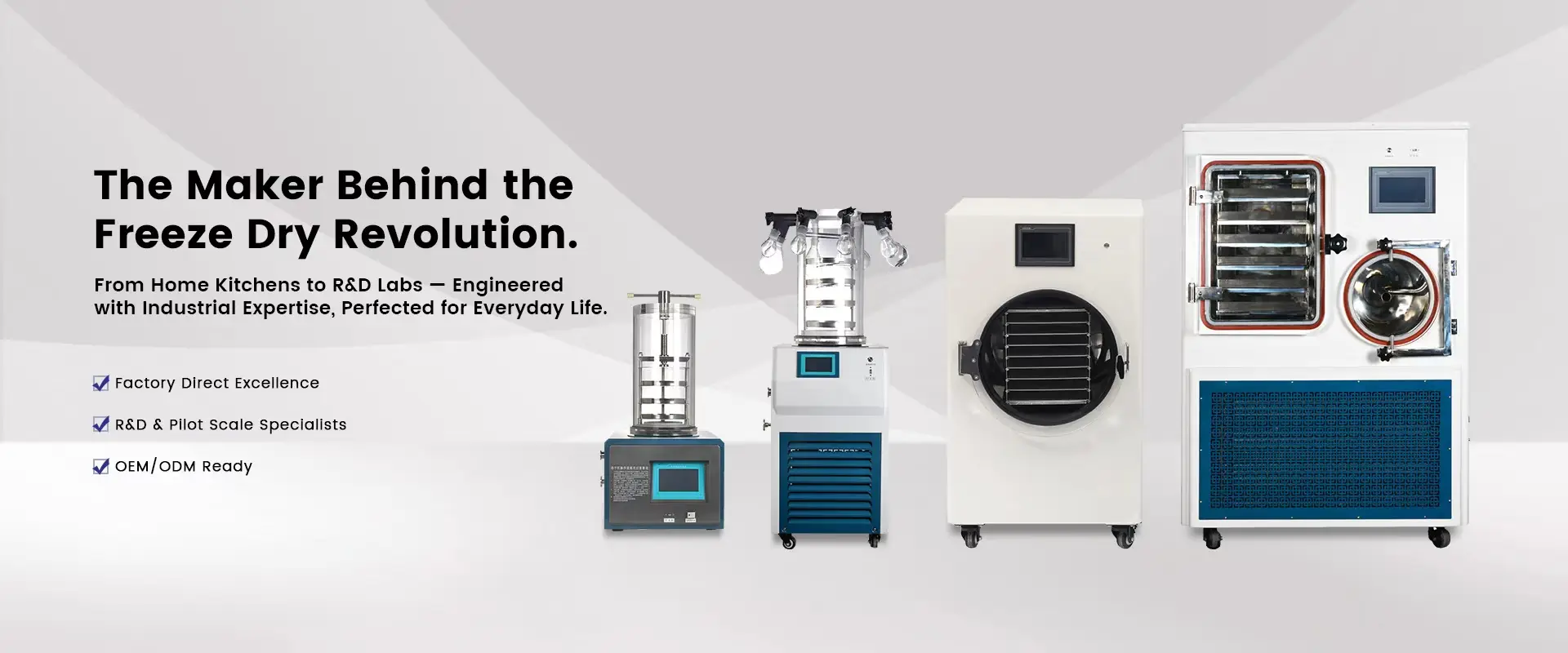
1. Providing Entrepreneurs with a Smooth, Full-Lifecycle Upgrade Path
-
HFD Series Home / Workshop Freeze-Dryers: Engineered with low initial capital investment, tailored perfectly for emerging brand recipe R&D, small-batch sample production, and private community retail businesses.
-
Pilot & Industrial-Scale Freeze-Dryers (e.g., ZLGJ-300 Series): Designed for mid-sized enterprises with operational experience looking to scale production and achieve continuous commercial mass production. Featuring a 3.15 ㎡ freeze-drying area and a 7+1 shelf layout, it delivers an exceptional energy efficiency ratio to help brands bridge the capacity gap seamlessly.
2. Three Core Advantages of Geliss Equipment
Advantage 1: ≤ -75°C Ultra-Low Temperature Condenser System for Total Vapor Interception
Addressing the persistent industry problem of pump oil emulsification, Geliss pilot systems come standard with an ultra-low temperature cold trap, reaching an unloaded condenser temperature of ≤ -75°C. Achieving a vapor interception rate of >99%, it intercepts water vapor thoroughly at the source, ensuring the vacuum pump system runs stably and maintains an extended lifespan during continuous production.
Advantage 2: ±1°C Silicone Oil Circulation Precision Thermal Control, Eliminating Temperature Dead Zones
Moving away from cheap electric heating wires that easily cause localized product scorching, Geliss utilizes an industrial silicone oil continuous circulation system. It achieves an unloaded shelf temperature range of -50°C to +70°C, holding temperature variance precisely within ±1°C. This guarantees uniform drying across all product trays, delivering plump, visually appealing finished goods without structural collapse.
Advantage 3: Full-Penetration Welding and 100% Helium Leak Testing
To withstand harsh operational environments characterized by years of continuous deep vacuum pressure and motor vibrations, Geliss uses heavy-gauge vacuum drying chambers. Every unit undergoes 100% helium leak testing before leaving the factory, eliminating micro-leakage risks and securing an asset service life of over 10 years.
Commercial Call to Action (CTA)
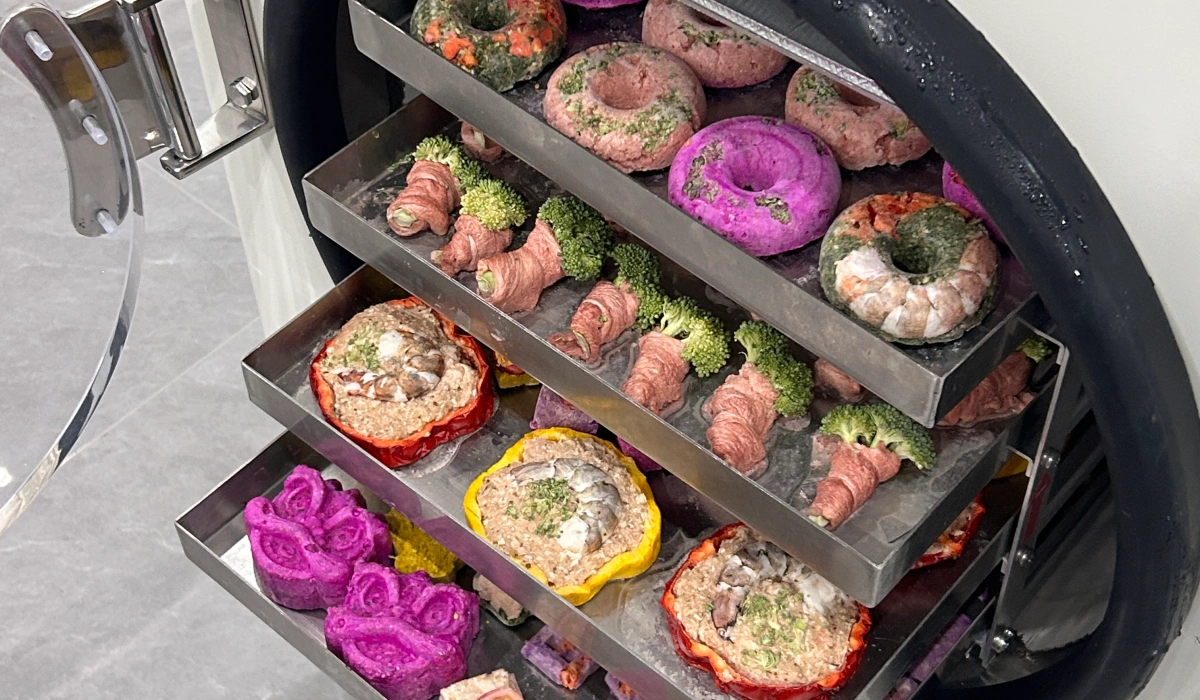
Amid the global wave of pet consumption premiumization, a stable, highly controllable freeze-drying system serves as a brand's most powerful weapon to transcend product replacement cycles and build a robust profit barrier.
💬 [Contact the Geliss Engineering Team today: Get your free, customized pet fresh food freeze-drying solution tailored to your production goals.]
2026 Freeze-Dried Candy Startup Guide: How to Launch a High-Profit Candy Brand with a Compact Freeze Dryer
SEND MESSAGE